
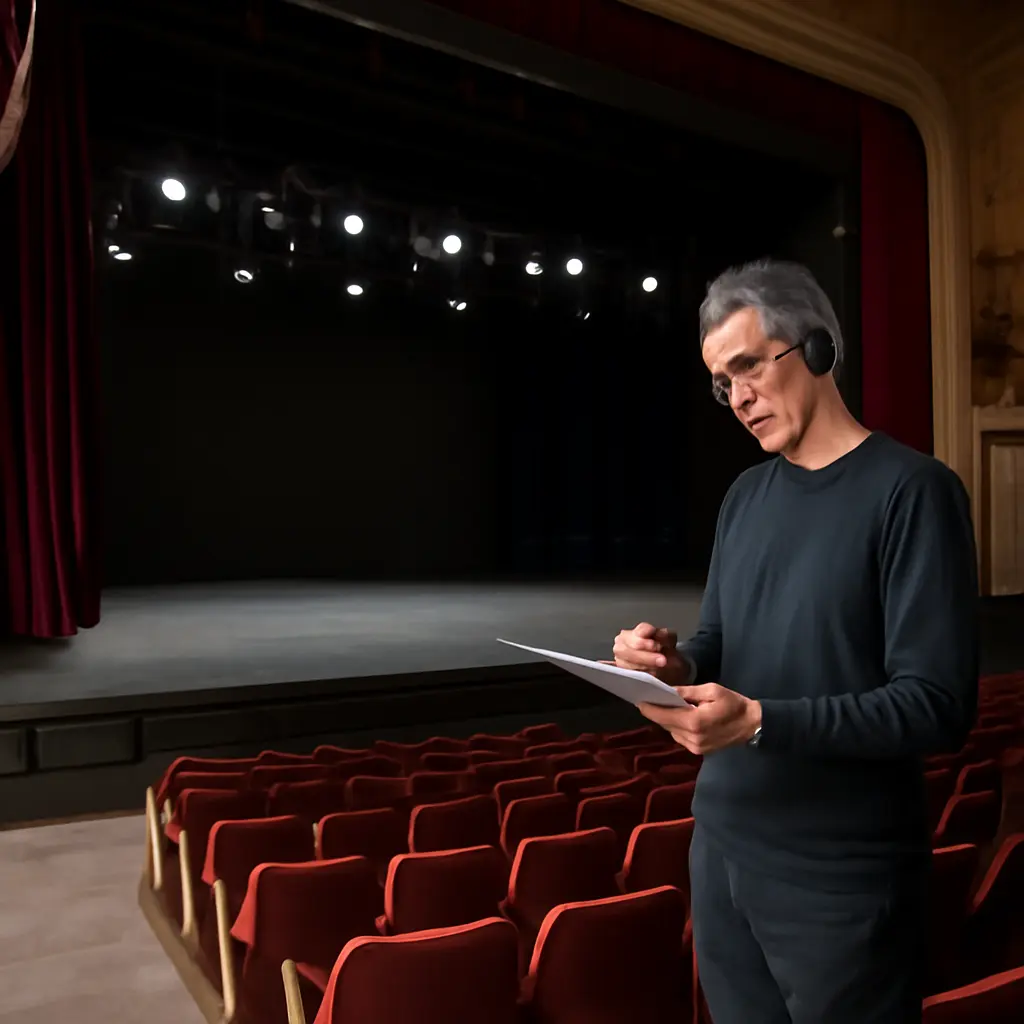
A stage manager is the person who coordinates a production’s rehearsals and performances, communicating decisions and keeping the show’s people, timing, and technical elements aligned. When a performance goes wrong, veteran stage managers do not try to control every variable or conceal every mistake: they assess safety, communicate clearly, protect the audience and performers, and use the production’s established procedures to recover or stop. Their work draws on practices such as calling cues, maintaining show reports, managing understudies, and coordinating emergency responses—skills that matter in an industry where the U.S. Bureau of Labor Statistics counted about 64,800 jobs for producers and directors in 2023, a broad occupational category that includes some stage managers.
How veteran stage managers respond when a show goes wrong
Stage management is a coordination role, not a license to improvise beyond one’s authority. Actors’ Equity Association’s stage-management guidance describes stage managers as responsible for helping maintain the artistic and technical integrity of a production and facilitating communication among the people making it. In practice, the exact duties and decision-making authority depend on the contract, venue, production, and emergency plan.
A “show-going-wrong” event can range from a missed entrance to a serious injury, electrical fault, or evacuation. Veteran practitioners distinguish these by urgency and risk. A harmless stumble may call for a quiet cue adjustment; a hazard to a performer or audience member calls for immediate safety action. The core sequence is simple: assess, communicate, recover when safe, and document.
Assess safety before preserving the performance
Assessment means identifying whether anyone is in immediate danger and whether continuing the show could make the situation worse. Stage managers typically rely on the venue’s emergency plan and designated leaders, such as the house manager, production manager, or safety personnel. They should not substitute theatrical judgment for medical or emergency expertise. If an incident requires a stop, the appropriate response is to use the agreed stop-show procedure and summon qualified help.
This priority is supported by workplace safety practice. The U.S. Occupational Safety and Health Administration says employers must provide a workplace free from recognized serious hazards and maintain procedures for emergencies. Those rules do not prescribe one universal theatrical cue or announcement; venues must adapt their plans to the building, production, and people present.
Keep communication brief, specific, and controlled
A stage manager’s communication system may include headset calls, backstage announcements, intercom, or direct contact with front-of-house staff. Under pressure, concise messages reduce confusion: identify the location, the immediate issue, and the action required. For example, “Hold the next cue; performer needs assistance at stage left” is more useful than a long explanation over a busy channel.
The National Fire Protection Association’s guidance on emergency planning emphasizes clear procedures and training. In theatre, that means knowing in advance who can pause the performance, who contacts emergency services, who communicates with the audience, and how accessible evacuation or shelter procedures will work. The venue’s plan—not an improvised universal rule—should determine the response.
How veteran stage managers recover a performance
Once immediate safety is addressed, recovery is the process of getting the production back to a stable point—or deciding that it cannot safely continue. Stage managers use cueing, performer communication, and contingency plans to preserve continuity without forcing a dangerous or confusing restart. The right recovery depends on what failed, where the show is in its sequence, and whether the cast and crew can proceed safely.
Recover from missed cues and technical failures
A cue is a timed instruction for a technical or performance event, such as a lighting change, sound effect, scene shift, or performer entrance. If a cue is missed, the stage manager and operators follow the production’s cueing conventions and backup plan. A delayed lighting state, for instance, may be held until the stage is safe and the operator can execute the next appropriate cue; the team should avoid “catching up” in a way that creates a new hazard.
The U.S. Bureau of Labor Statistics describes stage managers among the workers who coordinate production elements and help ensure that performances proceed as planned. That coordination is especially visible during technical problems: operators report what is functioning, the stage manager communicates the next action, and the production team decides whether to continue, pause, or stop according to its procedures.
Support performers through missed lines or entrances
A forgotten line or late entrance is usually a performance problem rather than an emergency. Actors may use the text, a fellow performer’s prompt, or an agreed improvisational bridge to return to the scene. The stage manager generally avoids interrupting the audience-facing performance unless the issue affects safety or makes continuation impossible. Afterward, notes can identify where the sequence broke down and what rehearsal adjustment may help.
Understudies and covers are another form of contingency planning. Actors’ Equity Association’s materials explain the role of understudies and replacement performers within professional theatre practice, while specific contracts and production policies govern when and how they are used. A stage manager coordinates the change with the company; they do not make a last-minute substitution without considering authorization, preparation, and safety.
Know when to pause, stop, or resume
A pause holds the performance temporarily; a stop ends or suspends it; a restart returns the company to an agreed point. These terms and their procedures vary by venue. Veteran stage managers clarify those decisions with production leadership and front-of-house staff rather than assuming that every show has the same authority structure or audience announcement.
A useful decision framework is to ask: Is anyone at risk? Is the problem contained? Can the production continue without creating further danger? Is there a clear, authorized way to resume? If the answer to safety or control is uncertain, the safer course is to hold and escalate. This reflects a broader emergency-management principle: response plans should define responsibilities and communication before an incident occurs.
How veteran stage managers learn from incidents
Recovery does not end when the curtain falls. A stage manager’s report can record what happened, when it happened, which cues were affected, what action was taken, and what follow-up is needed. The purpose is operational learning—not assigning blame in the heat of the moment. Reports can help the production identify recurring equipment faults, unclear handoffs, or rehearsal gaps.
Document the event and follow up
A useful incident record separates observed facts from interpretation. It may include the time, location, people notified, actions taken, and unresolved concerns, while keeping sensitive personal or medical information appropriately restricted. Any required workplace or venue incident reporting should follow the employer’s policies and applicable law.
For workplace injuries and illnesses, OSHA requires many employers to keep records, though exemptions and reporting rules depend on employer size, industry, and incident type. Its published national data show why systematic reporting matters: private industry employers reported 2.6 million nonfatal workplace injuries and illnesses in 2023. That figure covers all private industries, not theatre alone, and should not be treated as a count of stage-production incidents.
Turn the problem into a stronger plan
After the event, the team can review whether the emergency plan worked, whether instructions were understood, and whether a technical or personnel change is needed. A short debrief may lead to a revised cue sheet, a repair request, additional training, or a clearer stop-show protocol. The goal is to make the next response safer and more predictable, not to demand a flawless performance from people working in a live environment.
The wider lesson is that resilience is designed before opening night. Clear authority, practiced communication, accessible audience procedures, reliable equipment checks, and respectful reporting give stage managers room to respond calmly when the unexpected happens. Readers interested in theatre safety can consult Actors’ Equity Association’s stage-management resources, OSHA’s emergency-action-plan guidance, and their venue’s own policies.
Sources: Actors’ Equity Association, Stage Managers, https://www.actorsequity.org/resources/Producers/StageManagers/; U.S. Bureau of Labor Statistics, Occupational Outlook Handbook: Producers and Directors, https://www.bls.gov/ooh/entertainment-and-sports/producers-and-directors.htm; U.S. Occupational Safety and Health Administration, Emergency Action Plans, https://www.osha.gov/laws-regs/regulations/standardnumber/1910/1910.38; National Fire Protection Association, Emergency Response and Preparedness, https://www.nfpa.org/education-and-research/emergency-response-and-preparedness; U.S. Occupational Safety and Health Administration, Injury Tracking Application and Recordkeeping, https://www.osha.gov/recordkeeping; U.S. Bureau of Labor Statistics, Employer-Reported Workplace Injuries and Illnesses—2023, https://www.bls.gov/news.release/archives/osh_11192024.htm.