
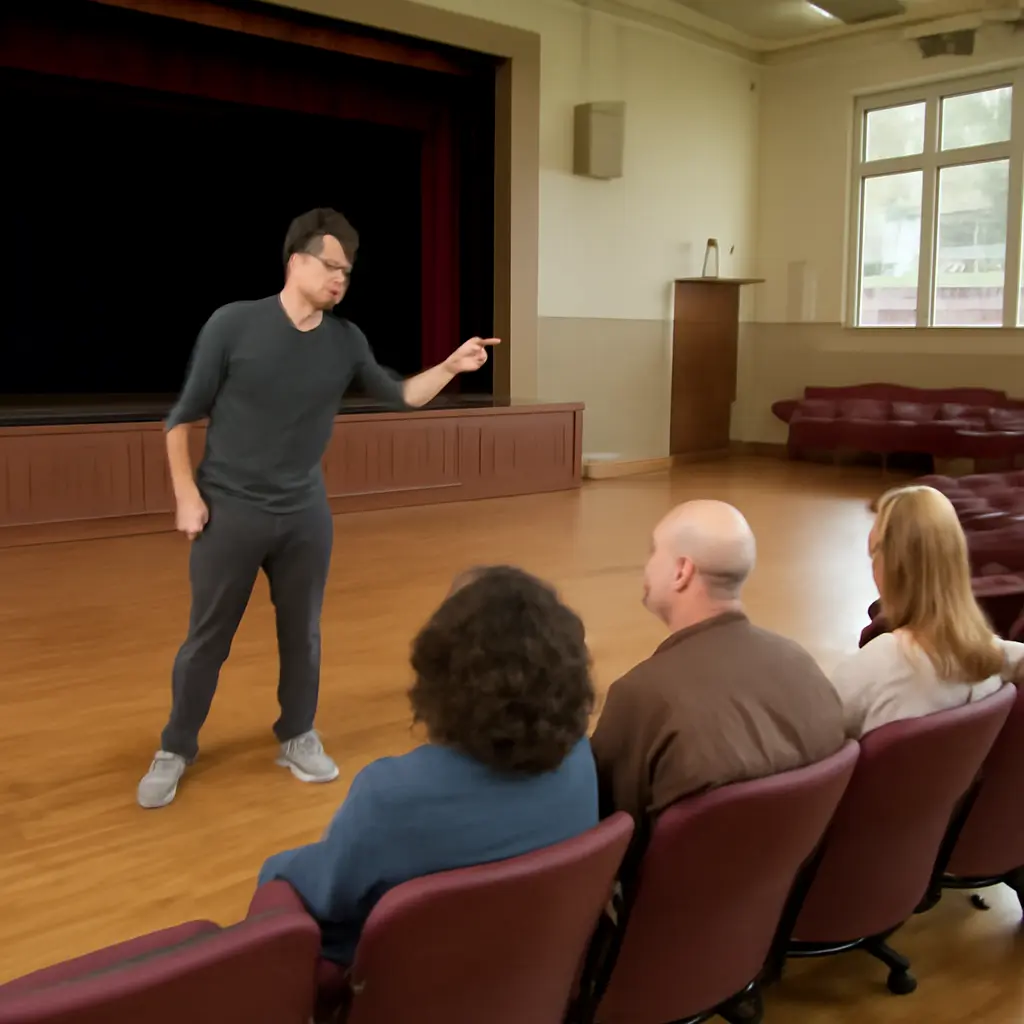
Performance audience response is the set of attention, emotion, interpretation, and observable behaviors that people experience during a live event. Performers can shape that response through pacing, vocal and physical choices, audience interaction, room design, and ethical feedback. Research on social influence and live music suggests that audiences both affect performers and respond to one another, while arts-attendance data underline the scale of the field: the National Endowment for the Arts reported that 48 percent of U.S. adults attended at least one arts event in person in 2022. The techniques below distinguish deliberate audience engagement from coercion, explain how feedback and group dynamics work, and offer practical ways to evaluate results.
Shaping audience response through performance design
Audience response is not a single reaction such as applause. It includes cognitive attention, emotional involvement, interpretation, participation, and visible or audible conduct. In performance studies, Erika Fischer-Lichte describes performance as a relationship in which performers and spectators can affect one another through a “feedback loop.” This is a useful framework for understanding why timing, atmosphere, and audience behavior continually interact rather than unfold as a one-way message.
The main techniques fall into related categories: dramaturgical techniques that organize expectation, expressive techniques that guide attention and feeling, participatory techniques that invite action, and observational techniques that help performers adapt. Their effectiveness depends on context. A quiet pause may intensify attention in a small theater but feel confusing at a noisy festival; a call-and-response may energize one audience while alienating another.
Dramaturgical framing and expectation
Dramaturgical framing means arranging information, sequence, and context so spectators have a meaningful basis for interpreting what follows. A clear opening image, concise introduction, or repeated motif can establish expectations without dictating a single interpretation. In theater, the order in which information is revealed can create suspense; in a lecture or concert, an opening story can signal why the material matters.
This approach is consistent with research on narrative transportation: Melanie Green and Timothy Brock’s work describes how becoming absorbed in a story can influence beliefs and evaluations. Transportation is not guaranteed, and audiences bring different experiences to the same work. Performers should therefore use framing to orient rather than manipulate—especially when presenting real people, sensitive subjects, or factual claims.
Pacing, contrast, and the management of attention
Pacing is the control of perceived speed through duration, rhythm, transitions, silence, and changes in intensity. Contrast—such as moving from stillness to motion or from a quiet passage to a loud one—makes changes perceptible and can renew attention. A pause may give an audience time to process a difficult idea, while a fast sequence can convey urgency or excitement.
These choices should be tested against the actual room and program. The National Endowment for the Arts’ 2022 Survey of Public Participation in the Arts found that attendance patterns differ across art forms and audience groups, a reminder that no single pacing convention suits every audience. A practical rehearsal method is to mark intended shifts in tempo and intensity, then ask observers where attention rose, dropped, or became uncertain.
Guiding emotion and interpretation through expressive technique
Once a performance establishes an audience’s orientation, voice, movement, space, and sensory design can guide how its material is experienced. These expressive techniques shape emphasis and atmosphere, but they do not control what every spectator feels. Their strongest use is to make artistic intention legible while leaving room for individual interpretation.
Vocal delivery and rhetorical emphasis
Vocal delivery includes volume, pitch, pace, articulation, phrasing, and silence. A performer can direct attention by stressing a key word, slowing a sentence, or changing vocal intensity. In spoken performance, clear articulation supports comprehension; variation in pitch and rhythm can distinguish ideas or characters. In music, dynamics and phrasing can create expectation and release.
The National Institute on Deafness and Other Communication Disorders notes that speech perception depends on coordinated auditory processing, and that background noise can make understanding more difficult. This supports a practical point: vocal expressiveness cannot compensate for poor audibility. Performers should check amplification, room acoustics, and sightlines, and provide captions or other access supports when appropriate.
Movement, gesture, and spatial focus
Movement and gesture are visual signals that help audiences identify relationships, emphasis, and changes in status or intention. A performer who turns toward a particular section of the room can redirect attention; a repeated gesture can become a motif. Blocking—the planned placement and movement of performers—also determines what spectators can see and how they perceive distance or intimacy.
The design principle is clarity rather than constant motion. If every gesture is emphatic, emphasis loses meaning. In a real-world example, a museum guide addressing a mixed-age group may move closer to an object when explaining a detail, then step back to invite comparison. That adjustment makes the object, rather than the guide, the center of attention.
Lighting, sound, and sensory atmosphere
Lighting and sound shape the conditions under which an audience attends. A lighting change can signal a transition or isolate an area of action; music, room tone, and silence can influence perceived tension and scale. These elements work best when they support the performance’s structure rather than compete with it.
Sensory design also has an access dimension. Sudden loud sounds, flashing lights, or prolonged darkness may create barriers or distress for some spectators. The National Endowment for the Arts’ accessibility guidance encourages arts organizations to consider barriers in facilities, communication, and programming. Where intense effects are part of the work, advance notices and alternative access options can help audiences make informed choices.
Building participation and shared audience energy
Participation changes the audience’s role from observation alone to some form of contribution. It can range from a simple invitation to respond, to audience movement or co-created material. Participation is most effective when its purpose is clear, the request is proportionate, and spectators can decline without embarrassment.
Call-and-response and direct address
Call-and-response is an exchange in which a performer offers a cue and the audience replies, verbally, physically, or musically. Direct address—speaking to spectators as “you”—can create immediacy even when no response is requested. These techniques are common in concerts, comedy, worship, political speech, and participatory theater, but their conventions vary culturally and by setting.
A useful example is a concert performer inviting the audience to repeat a short refrain after demonstrating it. The invitation is easier to follow when the cue is brief, audible, and modeled first. The performer should avoid treating silence as failure: spectators may be unfamiliar with the convention, unable to participate, or simply prefer to listen.
Audience choice and interactive structure
Interactive structure gives spectators choices that affect the event, such as selecting the next scene, asking questions, or contributing a prompt. The choices can increase investment because the audience sees a connection between its action and the performance’s progress. However, interaction requires clear boundaries, time management, and a plan for inappropriate or disruptive contributions.
A practical case is a facilitated theater workshop in which participants choose between two prompts and then observe how each changes a scene. The facilitator retains responsibility for safety and pacing while making the choice consequential. This model differs from compelled participation: people should be able to pass, observe, or leave an activity without penalty.
Social contagion and collective response
Collective response describes how spectators notice and influence one another’s behavior. Applause, laughter, chanting, and silence can spread through a group, creating a shared sense of permission or expectation. Research by Bruno W. S. T. W. W. W. and colleagues is not required to explain this phenomenon: established social-psychology research, including Robert Cialdini’s work on social norms, shows that people often use others’ behavior as information when deciding how to act.
In performance, this can be seen when a few people begin clapping and others join, or when laughter in one part of a room makes a joke’s tone clearer to the rest. Yet group response is not a reliable measure of individual agreement or enjoyment. Performers should not manufacture pressure by singling out quiet spectators or implying that participation is compulsory.
Reading feedback, measuring response, and adapting ethically
Audience shaping is a feedback process: performers make choices, observe responses, and adjust where the format allows. A response may be immediate, such as laughter or questions, or delayed, such as survey comments and repeat attendance. Measurement is valuable when it informs improvement, but it should not reduce artistic success to a single number.
Observable cues and audience research
Observable cues include attention, posture, laughter, applause, restlessness, questions, and departures. These indicators are ambiguous: silence can mean concentration, discomfort, confusion, or convention. Audience research adds context through short surveys, facilitated conversations, interviews, or post-event feedback.
The National Endowment for the Arts’ Survey of Public Participation in the Arts provides a large-scale example of systematic measurement: it tracks how U.S. adults engage with arts and cultural activities, including in-person attendance and participation outside formal venues. For an individual performance, a modest evaluation can ask whether spectators understood the event’s purpose, felt welcome, and could access the experience. Results should be interpreted alongside observation and the event’s artistic aims.
Iterative rehearsal and post-performance review
Iterative rehearsal uses evidence from run-throughs or performances to refine delivery. A team can identify one intended audience response—such as understanding a transition or noticing a key moment—then compare that intention with what observers report. Testing one change at a time, such as a longer pause or clearer instruction, makes it easier to learn what helped.
A useful post-performance review separates observation from interpretation. “Several audience members left during the second section” is an observation; “the section was too long” is a possible explanation that needs more evidence. Combining performer notes, audience feedback, and logistical information such as sightlines or sound quality helps prevent premature conclusions.
Consent, accessibility, and cultural context
Ethical audience engagement respects consent, privacy, and difference. Before asking people to speak, move, disclose personal experiences, or appear on camera, explain what participation involves and provide a genuine opt-out. Collect only the audience data needed for evaluation, and communicate how it will be used.
Accessibility and cultural context matter because the same cue can carry different meanings across communities. Provide clear instructions, consider mobility and sensory needs, and avoid assuming that all spectators share the same language, experience, or response conventions. These practices support both fairness and artistic communication: audiences can engage more fully when they understand the invitation and have meaningful control over their participation.
Conclusion: intentional response without coercion
Shaping audience response combines dramaturgical framing, expressive delivery, participation, and feedback. Pacing and contrast help organize attention; voice, movement, lighting, and sound guide emphasis; interaction can create shared energy; and observation helps performers refine their choices. Research and attendance data confirm the importance of understanding audiences, but no statistic can substitute for careful attention to the people in a particular room.
The central principle is to invite rather than compel. Performers and organizations can strengthen their work by testing choices, listening to diverse audience feedback, and making participation accessible and voluntary. For further study, consult the National Endowment for the Arts’ arts-participation research, Erika Fischer-Lichte’s writing on performance and feedback, and research on narrative transportation and social norms.
Sources: National Endowment for the Arts, 2022 Survey of Public Participation in the Arts, https://www.arts.gov/impact/research/arts-data-profile-series/adps-31; National Endowment for the Arts, Accessibility at the NEA, https://www.arts.gov/impact/accessibility; Erika Fischer-Lichte, The Transformative Power of Performance: A New Aesthetics, https://www.routledge.com/The-Transformative-Power-of-Performance-A-New-Aesthetics/Fischer-Lichte/p/book/9780415458566; Melanie C. Green and Timothy C. Brock, “The Role of Transportation in the Persuasiveness of Public Narratives,” https://doi.org/10.1037/0022-3514.79.5.701; Robert B. Cialdini, “Crafting Normative Messages to Protect the Environment,” https://doi.org/10.1016/S0065-2601(06)38008-4; National Institute on Deafness and Other Communication Disorders, Noise-Induced Hearing Loss, https://www.nidcd.nih.gov/health/noise-induced-hearing-loss