
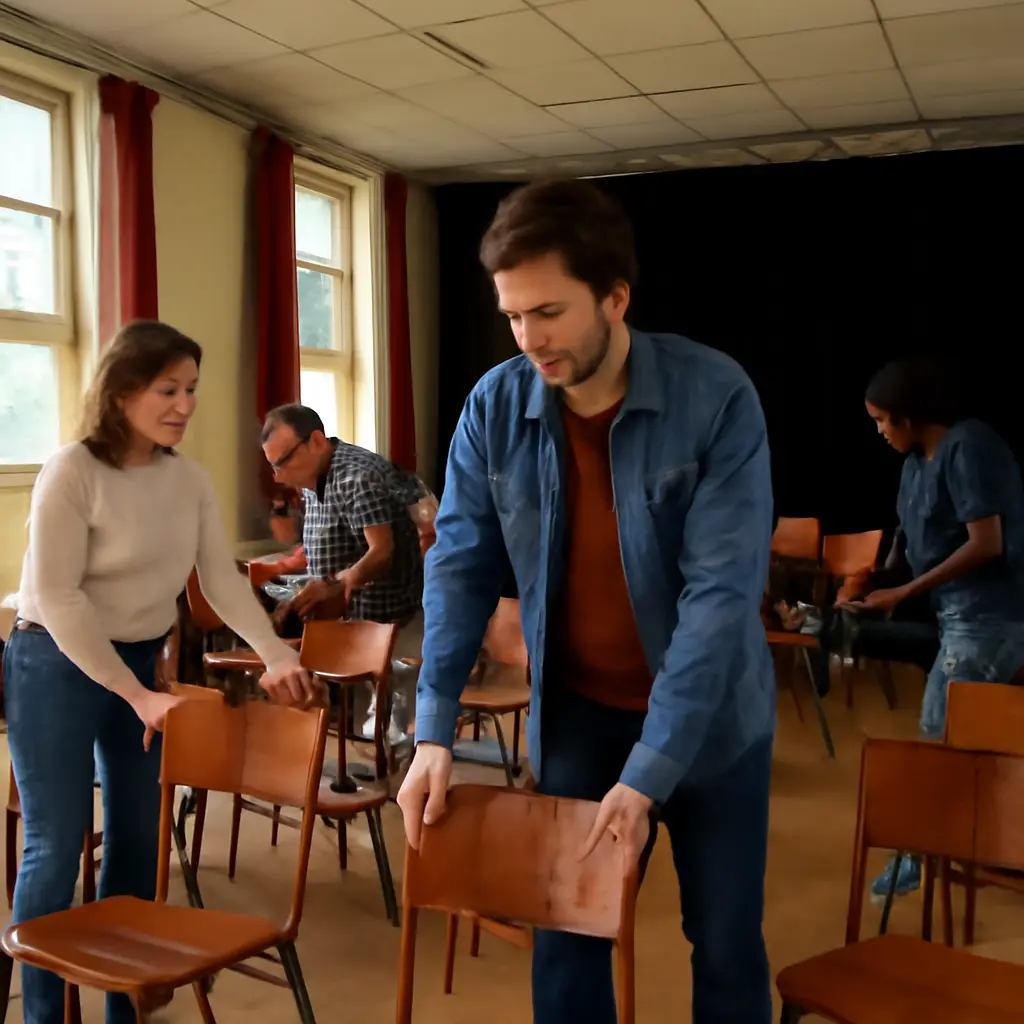
Community theatre welcomes people who want to make live performance, whether or not they have acted before. Getting started usually means finding a local group, choosing a beginner-friendly way to participate, and learning through rehearsals and collaboration. The U.S. Bureau of Labor Statistics reports that actors commonly develop their skills through formal study and practical experience, but formal training is not a prerequisite for joining a community production. By understanding what community theatre offers, how to find an entry point, and what to expect from auditions and backstage work, newcomers can take a manageable first step.
Community theatre offers accessible ways to begin
Community theatre is locally organized, amateur or volunteer theatre made by people who participate outside—or alongside—their regular jobs and studies. It can include plays, musicals, staged readings, improv, youth productions, and backstage projects. The American Association of Community Theatre (AACT) describes community theatre as theatre created by and for a community, emphasizing participation and local connection rather than professional employment.
That community focus makes it a practical place to learn. A newcomer may start as an actor, usher, stagehand, costume helper, or production assistant, then explore other roles as confidence grows. No single route is required, and a first production can be a low-stakes way to discover whether performing or production work suits you.
What “no experience required” really means
“No experience required” means that a group is willing to consider beginners; it does not necessarily mean every role is entry-level or that casting is guaranteed. Some productions require particular skills, availability, or vocal ranges. Read each theatre’s audition notice and ask whether newcomers are welcome, whether preparation is expected, and what other volunteer jobs are available.
The distinction matters because theatre is collaborative and schedule-driven. The National Endowment for the Arts’ arts-participation research tracks participation in activities such as acting and music-making, reflecting that arts involvement takes many forms beyond paid professional work. For a beginner, the most useful measure of readiness is usually willingness to learn, communicate, and honor commitments—not a résumé of past roles.
Choose among onstage and backstage roles
Onstage roles include acting, singing, dancing, and improvising. Backstage and front-of-house roles include stage management, scenery, props, costumes, lighting, sound, publicity, ticketing, and welcoming audiences. These are connected parts of one production: performers depend on technical and organizational teams, while those teams coordinate their work around rehearsals and performances.
If auditioning feels intimidating, volunteering backstage can offer a firsthand introduction to how a show works. Conversely, if performing is your main goal, you can still ask about ushering or crew work while waiting for a suitable audition. AACT’s community-theatre network and local arts councils can help people locate organizations and learn what kinds of productions they offer.
Finding a first community theatre opportunity
A first opportunity is a production, audition, workshop, or volunteer assignment that gives a newcomer a clear way to participate. Local theatre companies, libraries, colleges, municipal arts programs, and community centers may publish calls through their websites, social media, or noticeboards. Search for terms such as “community theatre auditions,” “volunteer crew,” and your town or region.
Before committing, check the group’s location, rehearsal calendar, production dates, expected fees, and accessibility arrangements. Ask whether participation is paid, volunteer, or subject to a membership or materials fee; practices vary. A quick conversation with the director or volunteer coordinator can clarify expectations and prevent surprises.
Assess the time commitment
A rehearsal schedule is the regular calendar of practice sessions, technical rehearsals, and performances. Ask how many evenings or weekends are involved, whether attendance is mandatory, and when the commitment ends. The U.S. Bureau of Labor Statistics notes that actors’ work schedules can include evenings, weekends, and irregular hours; community productions likewise often rehearse outside typical workdays, although each group sets its own timetable.
Be candid about work, caregiving, school, transport, and other obligations. If a full production is not feasible, a one-day volunteer shift, reading, or short workshop may be a better first step. Reliability is more valuable to a group than promising availability you cannot maintain.
Prepare for an audition as a beginner
An audition is a short evaluation in which a director considers a performer for a role. Notices may request a prepared monologue, a song, a cold reading from the script, or a movement exercise. Follow the instructions exactly, arrive early, and ask in advance if you are unsure what to prepare. If the notice offers open readings, a prepared monologue may not be necessary.
For a first audition, choose age-appropriate material that you understand and can present naturally. Practice aloud, not just silently, and bring a calendar so you can accurately report conflicts. Casting decisions reflect the needs of a particular production—including ensemble balance and scheduling—not a definitive judgment of your potential. Ask whether the theatre offers feedback, but accept that not every group can provide it.
Learning the craft through rehearsal and teamwork
Rehearsal is the structured process through which a cast and production team develop a performance. Beginners learn practical habits such as arriving prepared, listening to direction, marking script changes, and respecting shared equipment and space. These habits connect creative work with the safety and coordination required to put on a live show.
Build basic performance skills
Actors develop skills in voice, movement, character interpretation, memorization, and responding to scene partners. Beginners can build these through community workshops, local classes, reading plays, and regular practice. The U.S. Bureau of Labor Statistics says actors typically improve through experience and training, while noting that educational requirements vary; this supports treating a first community production as a learning opportunity, not waiting until you feel fully trained.
Take direction as information about the scene rather than as a personal criticism. Keep a pencil and script nearby, note adjustments, and try them in the next run. If you are working backstage, ask for a demonstration before operating unfamiliar tools or equipment, and follow the theatre’s safety procedures.
Practice dependable collaboration
A production depends on people coordinating across roles. Tell the stage manager promptly if you will be late or absent, learn the group’s communication system, and avoid changing props or blocking without agreement. The stage manager helps coordinate rehearsals and performance operations, making clear communication especially important.
Community theatre can also create social connection through shared creative work. The National Endowment for the Arts has documented the role of arts participation in community life, though benefits vary by activity and participant. Treat connection as a welcome possibility, not a guaranteed outcome: a respectful, inclusive group and a good fit matter.
Making the first experience welcoming and sustainable
A sustainable first experience is one that fits a participant’s time, finances, access needs, and comfort level. Community groups differ in how they handle costs, accommodations, and beginner support, so asking practical questions is part of getting started—not an inconvenience.
Ask about access, costs, and group culture
Before joining, ask about rehearsal-space accessibility, transport and parking, costume or supply expenses, and whether the group can accommodate relevant access needs. Also ask how the organization handles communication, conduct concerns, and safety. These details help you decide whether the group’s working environment is right for you.
A welcoming theatre should explain expectations clearly and treat beginners respectfully. If answers are evasive or the requested commitment is incompatible with your circumstances, consider another production or role. There is no need to make one organization your only route into theatre.
Use a small first-step plan
A simple plan can turn interest into action:
- Find two or three nearby theatre groups and compare their current opportunities.
- Choose one audition, workshop, reading, or volunteer role that fits your schedule.
- Contact the organizer with questions about preparation, time, costs, and access.
- Attend, observe, or participate, then reflect on what you enjoyed and what you want to learn next.
If the first audition does not lead to a role, ask about future productions or crew opportunities. Many people enter theatre through a sequence of small experiences rather than one decisive breakthrough.
Conclusion: Take a practical first step into community theatre
Community theatre is local, collaborative performance that offers beginner-accessible routes both onstage and behind the scenes. Newcomers can find opportunities through local groups, assess rehearsal demands, prepare for auditions, and learn essential skills through practice. The best first role is one that fits your interests and circumstances—and gives you a chance to contribute reliably.
Look up a nearby theatre, read its current notices, and ask one clear question about how beginners can participate. For further guidance, explore the American Association of Community Theatre and local arts organizations, then choose a workshop, audition, or volunteer shift that feels manageable.
Sources: American Association of Community Theatre, About AACT, https://aact.org/about-aact; National Endowment for the Arts, Survey of Public Participation in the Arts, https://www.arts.gov/impact/research/arts-data-profile-series/adp-30; U.S. Bureau of Labor Statistics, Actors, https://www.bls.gov/ooh/entertainment-and-sports/actors.htm.