
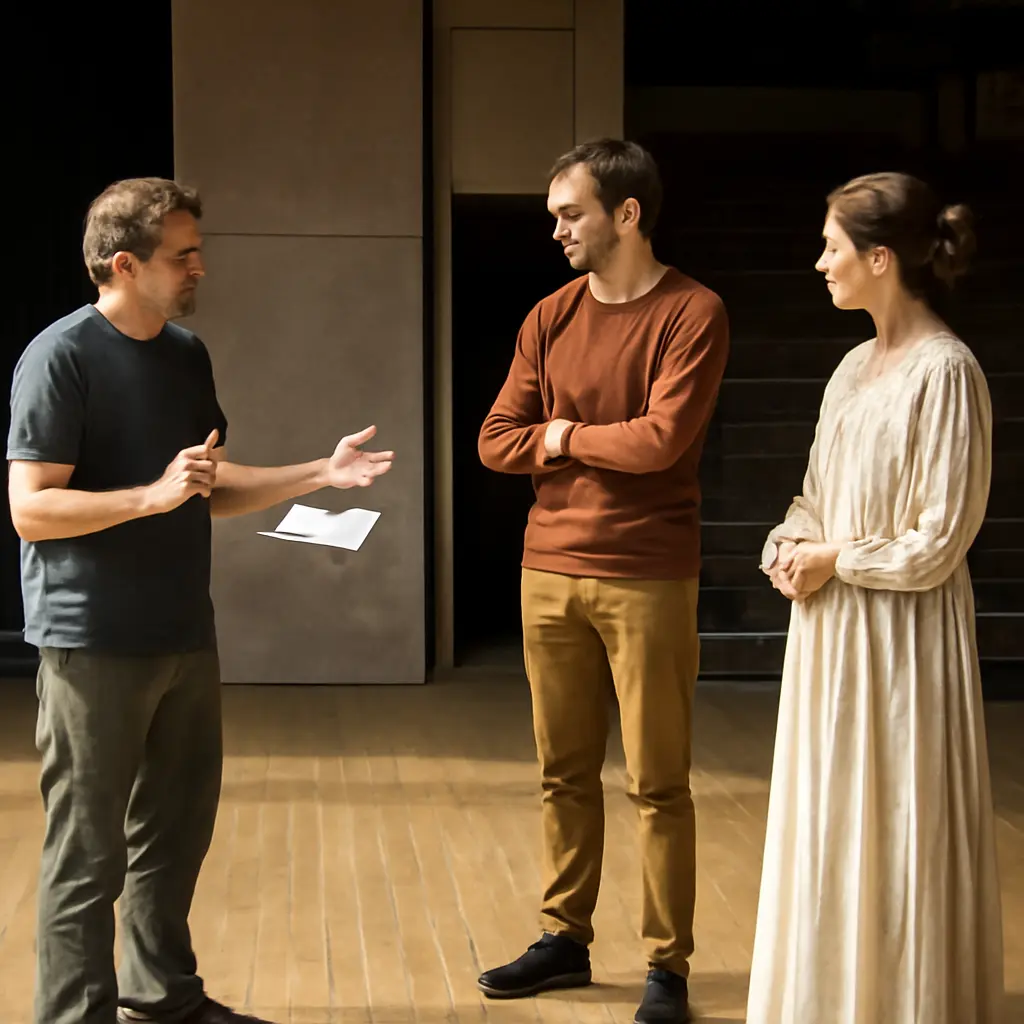
Classical theatre is the performance of plays rooted in traditions such as ancient Greek and Roman drama, Shakespeare, and other canonical repertories. In modern playhouses, it is heading toward more varied, audience-conscious forms: productions retain the texts’ historical and literary value while reinterpreting them through contemporary casting, design, technology, and community engagement. This direction matters as theatres balance artistic ambition with financial and audience pressures: Theatre Communications Group reported that its U.S. member theatres’ attendance in 2022 remained below pre-pandemic levels, even as earned income and public interest in live performance recovered unevenly. The trends shaping classical theatre include changing interpretation, expanded access, new production methods, and the challenge of sustaining the institutions that stage it.
Classical Theatre Is Moving Toward Contextual Reinterpretation
A useful definition of classical theatre comes from the repertory itself: it comprises works repeatedly performed and studied because their artistic influence and cultural questions remain significant. The Royal Shakespeare Company describes Shakespeare’s plays as works that continue to speak to contemporary audiences, while modern scholarship treats “classical” status as a product of performance, education, and cultural transmission—not simply age. This distinction helps explain why a modern production may preserve the language while changing its setting, casting, or visual vocabulary.
The category includes Greek tragedy and comedy, Roman drama, Shakespeare, and later canonical plays. These forms differ in language and performance conventions, but they share a continuing negotiation between the text’s historical world and the audience’s present. Directors increasingly make that negotiation explicit rather than presenting a supposedly neutral or definitive version.
Period-aware productions and new settings
A period-aware production uses research into the original context while deciding how much of that context to reproduce. A new setting relocates a play’s action—perhaps moving a tragedy into a modern political environment—to make its conflicts legible in another era. Neither approach is inherently more faithful: a production can preserve the text’s language and structure while using contemporary dress, or it can emphasize historical performance practices to reveal how the work first functioned.
The Royal Shakespeare Company’s work in Stratford-upon-Avon illustrates this range. Its productions draw on a continuing Shakespeare repertory but use distinct designs and directorial approaches rather than treating one staging as definitive. In practice, the useful question is not whether a production is “traditional” or “modern,” but what its choices clarify about power, family, conflict, and language.
Casting that broadens interpretation
Inclusive and color-conscious casting expands who can embody classical roles and can change the meaning audiences attach to identity and authority onstage. It does not automatically resolve questions of representation: theatres must also consider who directs, designs, leads institutions, and has access to training and employment. The approach is strongest when casting decisions are supported by thoughtful dramaturgy and a production that takes the play’s social context seriously.
This work connects classical theatre to the wider performing-arts workforce. The U.S. Bureau of Labor Statistics tracks employment across actors, directors, and producers, but those occupational figures do not by themselves show who receives leading roles or institutional decision-making power. Theatre companies therefore increasingly use season planning, hiring practices, and audience feedback to assess whether broader casting is producing durable change.
Modern Playhouses Are Expanding Access to Classical Theatre
Access in theatre means more than making tickets available: it includes affordability, physical and sensory access, geographic reach, and a sense that the work is relevant to different communities. The National Endowment for the Arts’ Survey of Public Participation in the Arts has documented how attendance varies by age, education, income, and other factors. Those differences make access a central artistic and organizational concern, not simply a marketing task.
Community partnerships and audience development
Audience development is the long-term work of building relationships with people who may not already attend theatre. For classical productions, this can include school partnerships, pre-show discussions, community workshops, discounted performances, and collaborations with local cultural organizations. These activities help audiences encounter unfamiliar language and historical references without reducing the plays to classroom exercises.
The Oregon Shakespeare Festival, for example, has combined a Shakespeare-focused repertory with educational programs and community engagement. Such models demonstrate how a theatre can connect canonical works to regional audiences while also recognizing that engagement requires sustained relationships and resources. A single outreach event is less likely to build trust than programming developed with community partners over time.
Accessibility in the auditorium and online
Accessible performance can include wheelchair seating, captioning, audio description, sign-language interpretation, relaxed performances, and clear information about sensory conditions. Digital formats can also extend reach through recorded performances, streaming, and online learning materials, although screen-based access is not a substitute for the shared experience of live theatre.
The pandemic accelerated experimentation with digital distribution. The National Endowment for the Arts reported that arts organizations adopted online activities during the pandemic, while theatres faced the practical challenge of balancing digital access with the costs of production and rights. The emerging model is often hybrid: in-person performances remain central, with digital resources used for preparation, education, or audiences unable to attend physically.
Production Technology Is Changing How Classical Plays Are Staged
Theatre technology includes lighting, sound, projection, digital scenery, and the systems that support rehearsal and performance. In classical theatre, technology is most effective when it serves the text and performers rather than competing with them. It can make a play’s setting more fluid, establish atmosphere quickly, or help audiences follow a complex story, but it also introduces costs and technical demands that smaller companies may not be able to sustain.
Projection, sound, and flexible scenography
Flexible scenography uses adaptable sets, lighting, and projection to move between locations or suggest time and mood. In Shakespeare’s history plays, for example, projected maps or headlines may frame political conflict; in Greek tragedy, sound and light can amplify the chorus’s presence or the scale of an unseen event. The design choice should remain legible and purposeful, particularly when rapid visual changes risk distracting from the language.
The National Theatre in London has made production design and technical innovation prominent parts of its public identity, including through filmed theatre distribution. Its National Theatre Live program has shown how cinema screenings can circulate stage work beyond the original venue. Such recordings offer a wider audience access to performances, while also raising a creative question: how to preserve theatre’s live, shared character when adapting it for a camera.
Digital performance and the limits of mediation
Digital performance includes livestreams, on-demand recordings, and productions designed specifically for online viewing. These formats can reach people separated by distance or mobility barriers and can support education and archival documentation. However, a filmed production changes the audience’s experience through camera framing, editing, and sound mixing; it is an adaptation of the stage event, not a transparent copy.
For playhouses, the practical implication is to define what digital distribution is meant to accomplish. A recording may extend a production’s life, support learning, or reach new communities, but it requires technical labor, rights clearance, and distribution planning. The strongest strategies treat digital work as a complement to live performance rather than a universal replacement.
The Future of Classical Theatre Depends on Financial and Institutional Resilience
Institutional resilience is a theatre’s ability to sustain artistic work while responding to financial, workforce, and audience change. Classical repertory can provide a recognizable artistic identity, but staging it still requires rehearsal time, skilled practitioners, accessible facilities, and income from tickets, donations, grants, or public support. The scale of that challenge varies sharply between major subsidized companies, commercial venues, and small nonprofit theatres.
Attendance, earned income, and recovery
Theatre finances depend on a mixture of earned and contributed revenue, and attendance is only one part of the picture. Theatre Communications Group’s annual reports on U.S. nonprofit theatres show that the pandemic disrupted both ticket income and operations; subsequent recovery has differed by organization and region. These sector-wide patterns caution against assuming that a successful production or a sold-out run is enough to secure long-term stability.
For classical theatre, a balanced season can help manage risk: familiar titles may attract established audiences, while new interpretations and less frequently staged works can build artistic distinction. That balance is not a formula. The relevant measures include attendance, repeat visits, community participation, production costs, and whether the company can fairly compensate the people who make the work.
Training, employment, and the next generation
Classical theatre relies on a broad workforce: actors, directors, dramaturgs, designers, stage managers, technicians, educators, and administrators. Training pathways need to support both close engagement with historical texts and practical skills in contemporary production, including collaboration, digital tools, and accessibility. The U.S. Bureau of Labor Statistics’ occupational data can describe employment trends, but theatre institutions must also examine job security, working conditions, and routes into leadership.
Universities, conservatories, regional theatres, and apprenticeship programs all influence who enters the field. Partnerships between them can connect classroom study to professional practice and help emerging artists engage classical texts without treating inherited conventions as fixed rules. Sustaining the repertory ultimately means sustaining the people and institutions capable of reinterpreting it.
Conclusion: Classical Theatre’s Future Is Adaptive and Shared
Classical theatre in modern playhouses is moving toward contextual reinterpretation, broader access, thoughtful use of technology, and greater attention to institutional resilience. New settings and inclusive casting can reveal fresh meanings in familiar plays; community partnerships and accessible formats can invite more people into the auditorium; digital production can extend reach when used with care. At the same time, attendance pressures, production costs, and workforce conditions remain significant constraints.
The broader implication is that classical works remain alive not because theatres preserve them unchanged, but because artists and audiences continue to question and remake them. Readers and theatregoers can support that future by attending local productions, using access services, exploring educational programs, and asking theatres how their artistic choices connect with the communities they serve.
Sources: Theatre Communications Group, Theatre Facts 2022, https://tcg.org/Web/Web/News/Reports/Theatre-Facts-2022.aspx; Royal Shakespeare Company, About the RSC, https://www.rsc.org.uk/about-us/; U.S. Bureau of Labor Statistics, Occupational Outlook Handbook: Actors, https://www.bls.gov/ooh/entertainment-and-sports/actors.htm; National Endowment for the Arts, Survey of Public Participation in the Arts, https://www.arts.gov/impact/research/publications/survey-public-participation-arts; Oregon Shakespeare Festival, Education and Engagement, https://www.osfashland.org/education/; National Endowment for the Arts, The Arts and the COVID-19 Pandemic, https://www.arts.gov/impact/research/publications/arts-and-covid-19-pandemic; National Theatre, National Theatre Live, https://www.nationaltheatre.org.uk/productions/national-theatre-live/.