
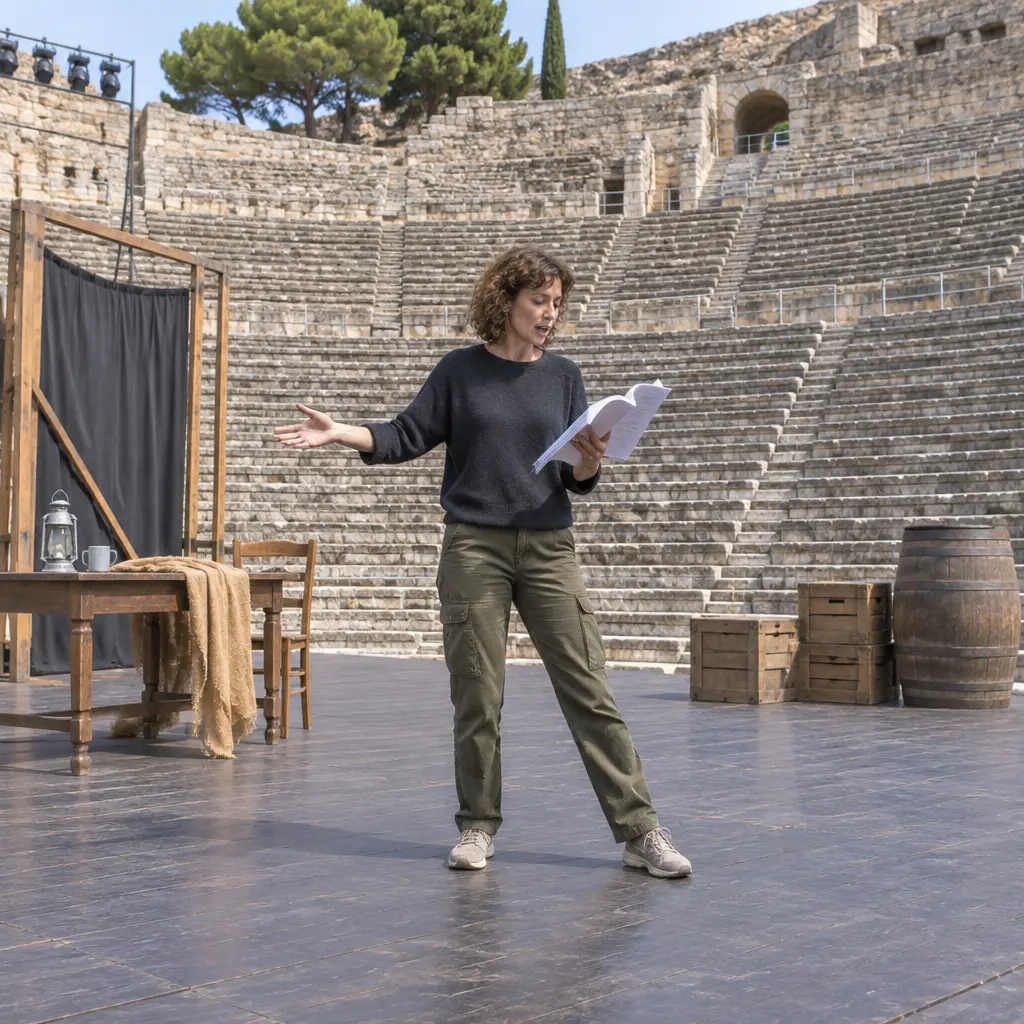
Classical theatre is still performed today: ancient Greek and Roman plays appear in professional festivals, repertory seasons, and community productions, while contemporary adaptations carry classical stories into new settings. The National Endowment for the Arts reported that 2.5% of U.S. adults attended a classical or traditional play in 2022, evidence of a continuing—if relatively specialized—audience. From the origins of Greek tragedy and Roman comedy to modern festivals and reinterpretations, classical theatre remains a living performance tradition rather than a museum piece.
Classical Theatre’s Performance Traditions
Classical theatre generally refers to dramatic works and performance conventions associated with ancient Greece and Rome, especially tragedies and comedies written between roughly the fifth century BCE and the early centuries CE. The term can also be used more broadly for later European “classics,” so the specific works and period should be identified. The ancient Greek plays of Aeschylus, Sophocles, Euripides, and Aristophanes, and the Roman plays of Plautus, Terence, and Seneca, remain central examples.
Theatre historian and classicist Edith Hall has written extensively about the continuing reception of Greek tragedy, including how new productions reinterpret ancient plays for audiences in different eras. Classical theatre’s defining features include verse or heightened language, recognizable dramatic forms, mythological or civic subject matter, and the use of performance conventions that vary by production. Today’s stagings may retain ancient texts while changing casting, design, music, translation, or setting.
The tradition is not confined to one format. Its modern forms include historically informed productions, contemporary translations, adaptations, festival performances, and educational or community theatre. These approaches differ in how closely they follow ancient conventions, but each keeps classical drama in active circulation.
Greek Tragedy and Comedy
Greek tragedy is a dramatic form associated with serious conflicts, reversal, and the consequences of human choices; Greek comedy uses humor, satire, and social or political criticism. The surviving works are a small fraction of the plays originally performed. The University of Oxford’s Classical Reception Studies resources note the lasting influence of Greek drama across later periods, while the ancient Athenian festival known as the City Dionysia provided a major setting for tragedy and comedy competitions.
Modern companies regularly stage works such as Sophocles’ Antigone and Euripides’ Medea. These plays are often translated into contemporary language, making their conflicts legible to new audiences. Productions may connect their themes—state authority, family loyalty, gender, war, or displacement—to current public debates without claiming that ancient society was identical to the present.
Roman Drama
Roman drama includes comedy, tragedy, and other theatrical entertainments shaped by Roman performance culture. Plautus and Terence are especially important for comedy; their plots, stock characters, and mistaken identities influenced later European theatre. Seneca’s tragedies, though their original performance history remains debated, had a substantial impact on Renaissance drama.
Roman plays are performed less frequently than the best-known Greek tragedies, but they remain part of university, festival, and specialist company repertoires. Their comic devices can feel strikingly familiar: disguises, family disputes, romantic confusion, and sharp exchanges still work onstage when translated and paced for contemporary audiences.
Classical Theatre’s Modern Stages and Audiences
Classical theatre survives through institutions that produce plays, festivals that bring performances together, and artists who reinterpret texts for new contexts. The National Endowment for the Arts’ 2022 Survey of Public Participation in the Arts found that 2.5% of U.S. adults attended a classical or traditional play during the survey period. This category is broader than ancient Greek and Roman drama alone, so it should not be read as a count of classical-text audiences specifically. It does, however, show that classical and traditional theatre remains part of contemporary cultural participation.
Attendance figures also describe only one part of the picture. They do not count every school performance, amateur production, online presentation, or adaptation, and they cannot capture the influence of classical plots on later theatre and popular culture. The examples below show how ancient drama continues to reach audiences through different production models.
Festivals and Repertory Companies
Festivals create a concentrated setting for classical performance, often pairing ancient works with modern interpretations. The annual Festival Internacional de Teatro Clásico de Mérida in Spain stages classical drama in the city’s Roman theatre, a historic venue that remains in use for live performance. The Epidaurus Festival in Greece likewise presents theatre at the ancient Theatre of Epidaurus, connecting contemporary audiences with a landmark of Greek theatrical history.
In the United Kingdom, the Royal Shakespeare Company and other repertory theatres have produced Greek tragedies alongside Shakespeare and modern drama. Such programming puts ancient plays into conversation with later dramatic traditions and gives actors, directors, and designers opportunities to revisit familiar texts. Festival schedules change from year to year, so current programme listings are the best way to confirm individual productions.
Adaptations and Contemporary Translations
Adaptation is a major reason classical theatre remains accessible. A translation may preserve the original plot while updating its language; an adaptation may also relocate the action, change the characters’ circumstances, or combine the ancient story with new material. For example, modern productions of Antigone have used contemporary political settings to foreground conflicts between personal conscience and state power.
A notable example is National Theatre Live’s 2015 production of Everyman, a medieval morality play rather than an ancient Greek or Roman work. It illustrates a broader point: “classical theatre” is sometimes used in programming to mean canonical drama across several historical periods. When discussing a particular production, naming the playwright and period avoids confusing ancient classical drama with later works that have also become classics.
Education and Community Performance
Universities, schools, and community theatres keep classical plays in performance beyond major professional venues. Student productions may explore chorus work, verse speaking, masks, or the relationship between text and movement. Community groups often choose accessible translations or shortened versions, giving participants practical experience with dramatic literature and collaborative performance.
These productions matter even when they are small. They introduce audiences and performers to works that may otherwise be encountered only through reading, and they create space to question whose voices are represented in inherited dramatic traditions. Modern casting and direction can also challenge long-standing assumptions about gender, race, citizenship, and authority while remaining in dialogue with the original text.
Why Classical Theatre Still Matters
Classical theatre persists because its plays combine recognizable human conflicts with forms that invite reinvention. Themes such as justice, power, grief, family obligation, war, and social status recur across cultures, while each production can make different choices about language, design, and interpretation. The ancient context is essential, but it does not prevent a play from speaking to present-day concerns.
The continuing performance of classical drama also demonstrates that cultural heritage is not static. A play’s meaning is shaped by the people who perform it and the audiences who encounter it. The NEA attendance measure offers one indicator of participation, while festivals, repertory programming, education, and adaptations show the range of ways the tradition remains active.
In short, classical theatre is still performed today in professional venues, historic outdoor theatres, schools, universities, and community spaces. Greek tragedy and comedy are the most visible ancient forms, while Roman drama and later works classified as classics also appear on modern stages. To explore the tradition, look for current festival programmes, local theatre listings, or a production accompanied by a translator’s or director’s notes.
Sources: National Endowment for the Arts, Survey of Public Participation in the Arts, 2022, https://www.arts.gov/impact/research/publications/survey-public-participation-arts; Festival Internacional de Teatro Clásico de Mérida, Official Website, https://www.festivaldemerida.es/; Athens Epidaurus Festival, Official Website, https://aefestival.gr/; Royal Shakespeare Company, Productions and Repertoire, https://www.rsc.org.uk/; University of Oxford, Classical Reception Studies Network, https://www.classics.ox.ac.uk/classical-reception